CONDITIONER BARS WHICH DO NOT MAKE HAIR HEAVY OR GREASY
People often share their negative hair conditioner bars experiences with us, and tell us that some hair conditioners they have tried before made their hair really heavy and greasy, so we would like to explain some facts about conditioner bars.
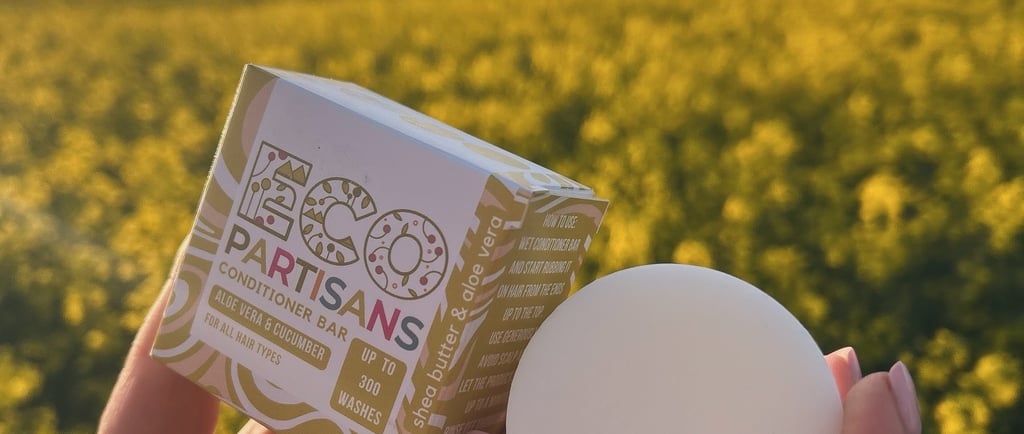
Conditioner bars are often marketed as ultra-natural, oil-rich, and chemical-free. While that sounds appealing, it’s also the reason many people try a conditioner bar once… and never use it again.
The most common complaint?
Greasy, heavy, limp hair.
The Problem With Oil-Only Conditioner Bars
Many conditioner bars are formulated almost entirely from natural oils and butters such as:
Coconut oil
Shea butter
Cocoa butter
Olive oil
These ingredients are excellent emollients, but they are not conditioners in a cosmetic-science sense.
Oils:
Sit on top of the hair shaft rather than binding to it
Do not selectively target damaged areas
Are difficult to rinse away completely
Accumulate over time, especially on fine or low-porosity hair
When a bar relies only on oils for “conditioning,” hair is often left:
Coated instead of conditioned
Weighed down and greasy
Flat at the roots but oily at the ends
Prone to buildup that dulls shine
This effect is amplified in solid formats, where oils are highly concentrated and applied directly to wet hair.
Why “Natural Oils Only” Is Not Better Hair Care
Hair is not skin.
Unlike skin, hair fibers are dead keratin structures. They don’t absorb oils in the way marketing suggests. Real conditioning requires electrostatic interaction, not just lubrication.
That’s where many oil-only bars fall short.
They moisturize by overloading the hair with fats instead of actively conditioning it.
The Science of True Conditioning: Why Ecopartisans Does It Differently
At Ecopartisans, we don’t rely on oil overload to create softness.
Our conditioner bar is built around Behentrimonium Methosulfate (BTMS) — a cationic conditioning agent widely used in professional hair care.
What Is Behentrimonium Methosulfate?
Despite the intimidating name, BTMS is:
Derived from natural rapeseed (canola) oil
Biodegradable
Extremely gentle and non-irritating
Most importantly, it’s positively charged.
Hair fibers are naturally negatively charged, especially when damaged or wet. This means BTMS is electrostatically attracted to hair.
Instead of coating everything indiscriminately, it:
Binds where hair needs it most
Smooths the cuticle
Reduces static and frizz
Improves manageability without heaviness
Why BTMS Doesn’t Make Hair Greasy
Because BTMS:
Conditions without leaving an oily film
Rinses clean while still delivering softness
Provides slip and detangling without buildup
This is why professional conditioners don’t rely on oils alone — they rely on cationic conditioning agents.
The Role of Cetearyl Alcohol (and Why It’s Not Drying)
Our formula also includes Cetearyl Alcohol, a fatty alcohol (not to be confused with drying alcohols like ethanol).
Cetearyl Alcohol:
Adds structure and stability to the bar
Enhances creaminess and slip
Helps evenly distribute conditioning agents
Supports long-lasting performance
It works synergistically with BTMS to create a smooth, luxurious conditioning experience — without grease, residue, or heaviness.
Conditioning That Works With Hair, Not Against It
The difference between greasy hair and beautifully conditioned hair isn’t about how much oil you add.
It’s about formulation intelligence.
Oil-only bars rely on excess fats to mimic conditioning.
Ecopartisans uses targeted, science-backed actives that actually bond to hair and improve its feel and performance.
The result:
Soft, detangled hair
Lightweight conditioning
No oily residue
No buildup over time
The Takeaway
If a conditioner bar leaves your hair greasy, it’s not “extra nourishing.”
It’s poorly balanced.
True conditioning doesn’t come from drowning hair in oils — it comes from ingredients that understand hair chemistry.
Ecopartisans conditioner bars prove that sustainability and performance don’t have to compete.
You can have both.